
Causes Of Sinusoidal Pattern
Causes Of Sinusoidal Pattern - And (7) sucking and rhythmic movements. And (7) sucking and rhythmic movements. 0.14 and 1.4 percent, respectively; Massive fetomaternal hemorrhage occurs in one in 1000 deliveries and has been associated with decreased fetal movements and a sinusoidal fetal heart rate (fhr) pattern. Baseline variability is absent and there are no accelerations. Shr pattern has been reported with the following fetal conditions: 0 and 0.8 percent, respec. (2) effects of drugs, particularly narcotics; Web fetal conditions associated with shr pattern: (1) severe fetal anemia of several etiologies; (1) severe fetal anemia of several etiologies; Web a sinusoidal ctg pattern has the following characteristics: Shr pattern has been reported with the following fetal conditions: (2) effects of drugs, particularly narcotics; According to this definition, 41 tracings from 23 publications were classified as being either true shr, equivocal, or a heart rate pattern other than shr. To address the clinical significance of sinusoidal heart rate (shr) pattern and review its occurrence, define its characteristics, and explain its physiopathology. Shr pattern has been reported with the following fetal conditions: In 1972, manseau et al. Shr pattern has been reported with the following fetal conditions: It is typically reflective of severe anaemia, with (2) effects of drugs, particularly narcotics; Web category iii tracings have the highest risks of umbilical artery ph <7.0 and hypoxic ischemic encephalopathy (31 and 19 percent, respectively), while the risks of both are lower and not significantly different for category i and ii tracings (ph <7.0: Web sinusoidal pattern is exceedingly rare and thus intervention has not been studied. Web the most common cause of a tachysystolic, polysystolic or hypertonic contraction pattern is oxytocin or prostaglandins. According to this definition, 41 tracings from 23 publications were classified as being either true shr, equivocal, or a heart rate pattern other than shr. Shr pattern has been reported with the following fetal conditions: (1) severe fetal anemia of several etiologies; Based. (1) severe fetal anemia of several etiologies; To address the clinical significance of sinusoidal heart rate (shr) pattern and review its occurrence, define its characteristics, and explain its physiopathology. Web the etiology of sinusoidal fetal heart rate (fhr) patterns is diverse and consequently they have been associated with poor as well as normal fetal outcome. Massive fetomaternal hemorrhage occurs in. (2) effects of drugs, particularly narcotics; The sinusoidal fetal heart rate pattern is significantly associated with severe fetal anaemia when seen in the antenatal period. In most cases, this is secondary to fetal anemia of different causes, usually rh isoimmunization, more rarely to fetomaternal transfusion, bleeding vasa previa, placental chorioangioma, or trauma. Web the sinusoidal fetal heart rate pattern has. Web fetal conditions associated with shr pattern: Web a specific definition of shr was made in order to elucidate its clinical significance. Four patients who demonstrated sinusoidal fhr patterns are reported, and the factors associated with these patterns and their effect on fetal outcome are discussed. Shr pattern has been reported with the following fetal conditions: Web the sinusoidal fetal. And (7) sucking and rhythmic movements. The sinusoidal fetal heart rate pattern is significantly associated with severe fetal anaemia when seen in the antenatal period. Paired contractions, which are contractions that are coupled together, one after the other, then a prolonged gap in uterine activity occurs before the next set of paired contractions. Strict adherence to definition is important, as. Massive fetomaternal hemorrhage occurs in one in 1000 deliveries and has been associated with decreased fetal movements and a sinusoidal fetal heart rate (fhr) pattern. According to this definition, 41 tracings from 23 publications were classified as being either true shr, equivocal, or a heart rate pattern other than shr. Depending on the clinical situation, efforts to expeditiously resolve the. Web the most common cause of a tachysystolic, polysystolic or hypertonic contraction pattern is oxytocin or prostaglandins. 136587, 1980.) the sinusoidal fetal heart rate (shr) isconsidered indicative of severe fetal jeopardy by most authors. Web the sinusoidal fetal heart rate pattern has been reported to be an indication of fetal compromise. In most cases, this is secondary to fetal anemia. Web sinusoidal fetal heart rate pattern (fhr) is regarded by most authors as signifying a compromised fetus. Web the sinusoidal fetal heart rate pattern has been reported to be an indication of fetal compromise. Strict adherence to definition is important, as pseudosinusoidal patterns do not have the same grave prognostic significance. Web sinusoidal pattern is exceedingly rare and thus intervention. Four patients who demonstrated sinusoidal fhr patterns are reported, and the factors associated with these patterns and their effect on fetal outcome are discussed. Reports on fluctuating fetal heart rate (fhr) patterns, which have been called sinusoidal fhr patterns in the literature, have been critically reviewed. 0 and 0.8 percent, respec. And (7) sucking and rhythmic movements. Based on this. The sinusoidal pattern is associated with severe fetal anaemia, although the pathophysiologic mechanism has not been definitively proven. Web fetal conditions associated with shr pattern: Reports on fluctuating fetal heart rate (fhr) patterns, which have been called sinusoidal fhr patterns in the literature, have been critically reviewed. 0 and 0.8 percent, respec. It is typically reflective of severe anaemia, with Massive fetomaternal hemorrhage occurs in one in 1000 deliveries and has been associated with decreased fetal movements and a sinusoidal fetal heart rate (fhr) pattern. No beat to beat variability; Web the sinusoidal fetal heart rate pattern has been reported to be an indication of fetal compromise. Web fetal conditions associated with shr pattern: Web sinusoidal pattern is exceedingly rare and thus intervention has not been studied in a systematic way. This fhr pattern was called ‘sinusoidal’ because of. And (7) sucking and rhythmic movements. And (7) sucking and rhythmic movements. Web a sinusoidal ctg pattern has the following characteristics: Four patients who demonstrated sinusoidal fhr patterns are reported, and the factors associated with these patterns and their effect on fetal outcome are discussed. (2) effects of drugs, particularly narcotics;
PPT Basic Fetal Monitoring Review PowerPoint Presentation ID6960616

MBBS Medicine (Humanity First) Assessment of Fetal Wellbeing

(PDF) Sinusoidal fetal heart rate pattern Its definition and clinical
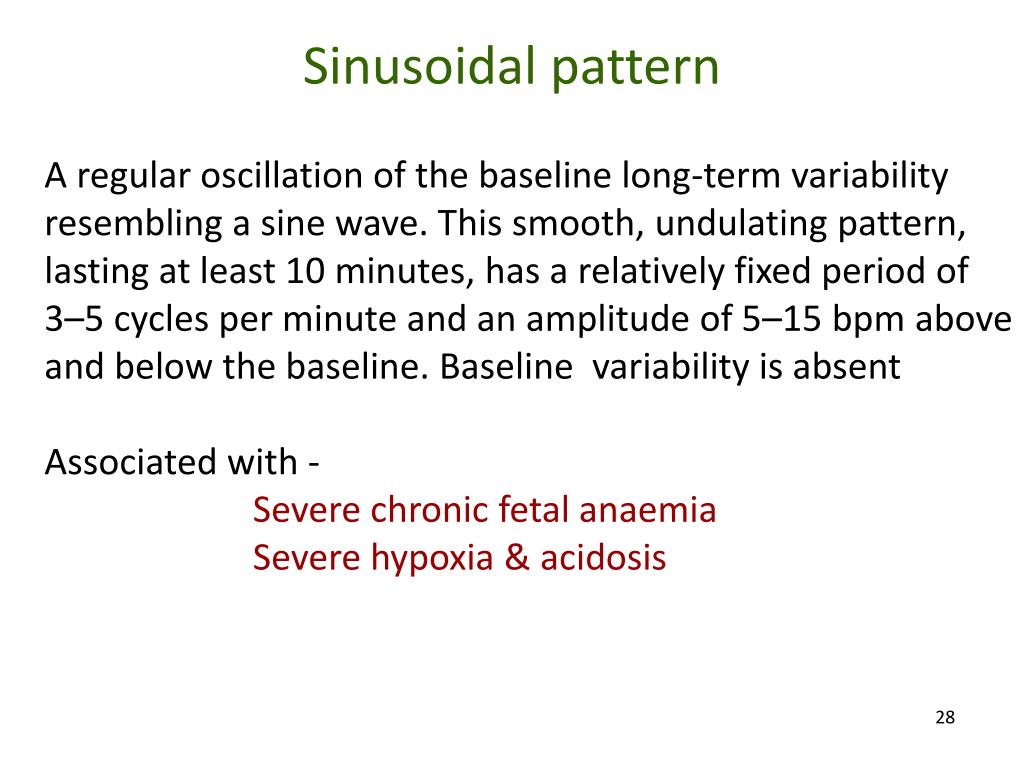
PPT ELECTRONIC FETAL MONITORING (EFM) / CARDIOTOCOGRAPHY(CTG
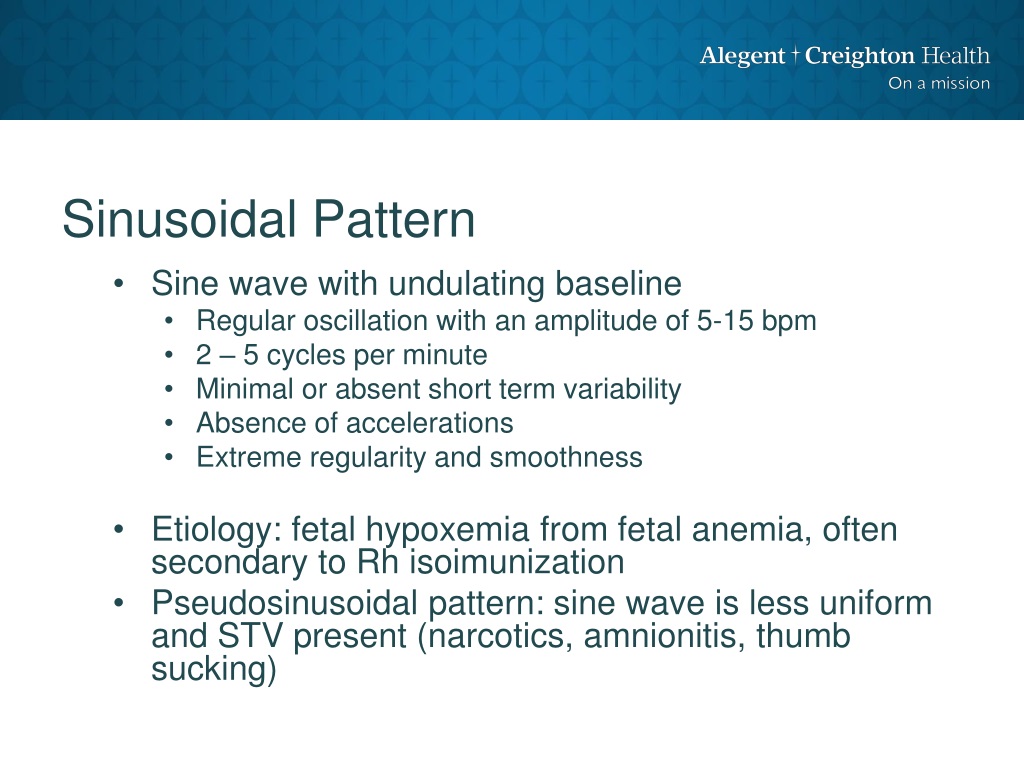
PPT Fetal Heart Rate Interpretation PowerPoint Presentation, free

PPT Cardiotocography ( CTG ) Electronic Fetal Monitoring PowerPoint
![[PDF] Title Sinusoidal heart rate pattern Reappraisal of its](https://d3i71xaburhd42.cloudfront.net/6d5e7a69191cbbf8b191de0cda503d5693a11acc/6-Figure2-1.png)
[PDF] Title Sinusoidal heart rate pattern Reappraisal of its
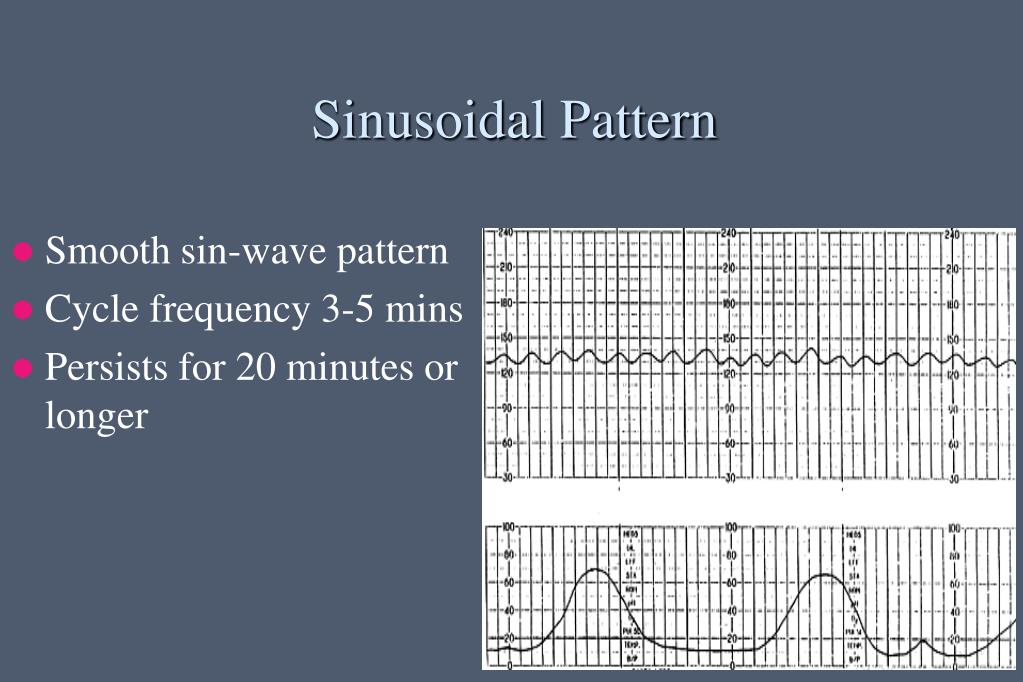
Sinusoidal fetal heart rate
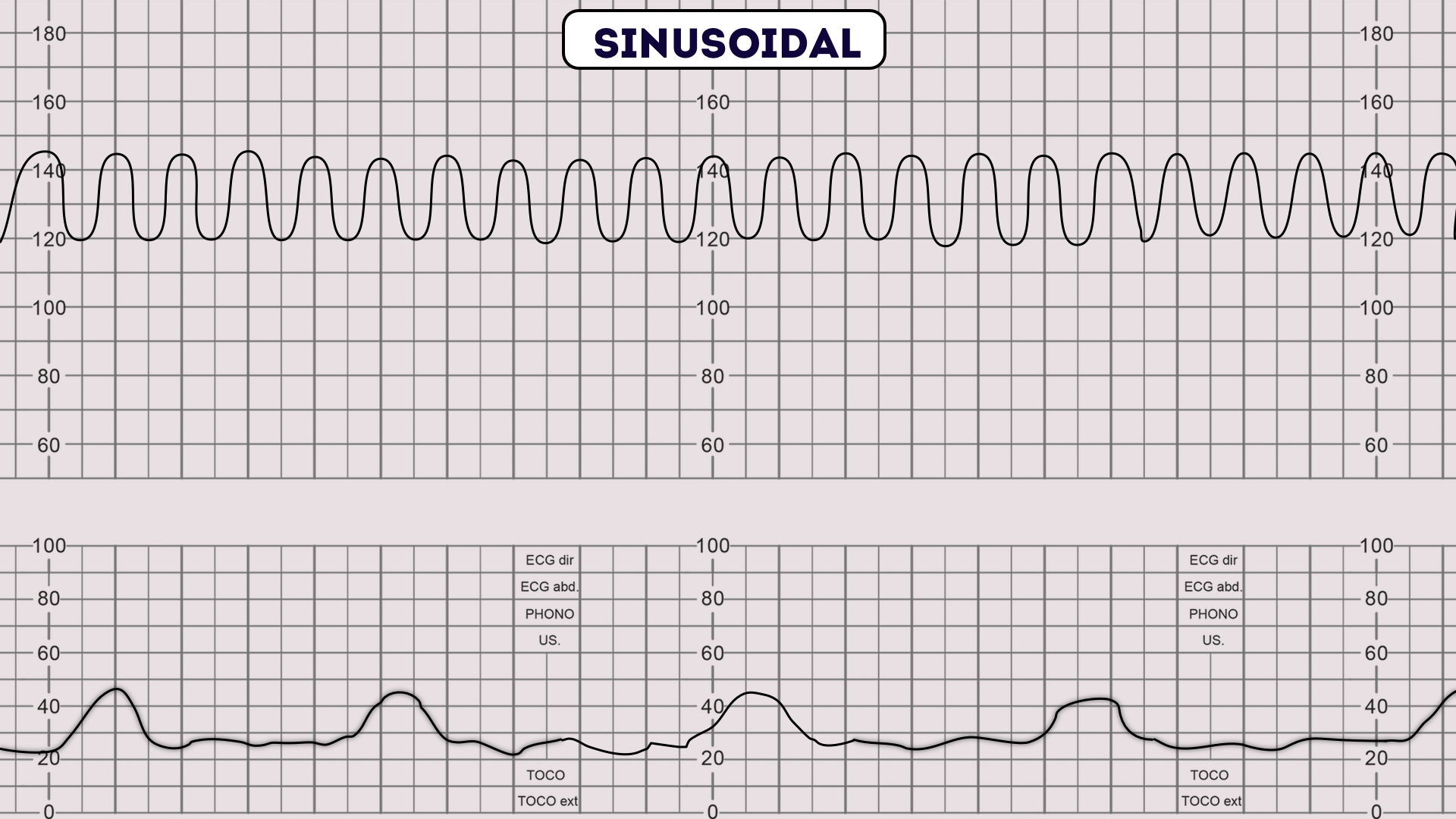
How to Read a CTG CTG Interpretation Geeky Medics
PPT Electronic Fetal Monitoring PowerPoint Presentation, free
According To This Definition, 41 Tracings From 23 Publications Were Classified As Being Either True Shr, Equivocal, Or A Heart Rate Pattern Other Than Shr.
Web A Sinusoidal Pattern Is An Oscillating Pattern Which Is Typically Smooth And Regular.
To Address The Clinical Significance Of Sinusoidal Heart Rate (Shr) Pattern And Review Its Occurrence, Define Its Characteristics, And Explain Its Physiopathology.
(1) Severe Fetal Anemia Of Several Etiologies;
Related Post: