
D1 Extension Pattern Upper Extremity
D1 Extension Pattern Upper Extremity - This video explains about how. It can be used in different population according to needs. Have your client bring their arm down and to the side, rotating. Web pnf is technique used to improve neuro muscular coordination and endurance. Web we will describe the patterns in terms of end position. Web the shoulder pnf (proprioceptive neuromuscular facilitation) pattern d1 can help improve strength and mobility in the shoulder after an injury or surgery. D1 (diagonal 1) shoulder flexion is flexion, adduction, external rotation. Have your client bring their arm up across their body, rotating their thumb to point up. Web the d2 extension pattern (extension/adduction/medial rotation) minimizes upper trapezius activity while maximizing the activation of the lower trapezius and serratus. Web the upper limb patterns used in this study were the d1 and d2 patterns. Web proprioceptive neuromuscular facilitation (pnf) the goals of pnf are to improve range of motion (rom), flexibility, strength, and coordination while increasing joint stability and. Web the shoulder pnf (proprioceptive neuromuscular facilitation) pattern d1 can help improve strength and mobility in the shoulder after an injury or surgery. Web the d2 extension pattern (extension/adduction/medial rotation) minimizes upper trapezius activity while maximizing the activation of the lower trapezius and serratus. Web this video demonstrates the concept of pnf diagonal patterns (d1 and d2) in the upper extremity. Web a patient completes a d1 extension pattern for the upper extremity. Web proprioceptive neuromuscular facilitation (pnf) is a dynamic approach to the evaluation and treatment of neuromusculoskeletal dys function with particular emphasis on the trunk. Web pnf is technique used to improve neuro muscular coordination and endurance. Trapezius and middle deltoid b. D1 extension is extension, abduction, internal rotation. Web the d2 extension pattern (extension/adduction/medial rotation) minimizes upper trapezius activity while maximizing the activation of the lower trapezius and serratus. D1 and d2 motions targeting flexion and extension. Web the d2 extension pattern (extension/adduction/medial rotation) minimizes upper trapezius activity while maximizing the activation of the lower trapezius and serratus. Web when applying manual resistance to the upper extremity using the d1 extension pattern (pnf), the muscle groups being facilitated (strengthened) are the shoulder extensors. Web what are the upper extremity. Web the upper and lower extremities each have two patterns: Web pnf is technique used to improve neuro muscular coordination and endurance. Web we will describe the patterns in terms of end position. Web proprioceptive neuromuscular facilitation (pnf) the goals of pnf are to improve range of motion (rom), flexibility, strength, and coordination while increasing joint stability and. Web what. Web proprioceptive neuromuscular facilitation (pnf) is a dynamic approach to the evaluation and treatment of neuromusculoskeletal dys function with particular emphasis on the trunk. D1 extension is extension, abduction, internal rotation. Web the upper and lower extremities each have two patterns: Web we will describe the patterns in terms of end position. Trapezius and middle deltoid b. Have your client bring their arm down and to the side, rotating. D1 extension is extension, abduction, internal rotation. Web the upper limb patterns used in this study were the d1 and d2 patterns. This video explains about how. D1 and d2 motions targeting flexion and extension. D1 and d2 motions targeting flexion and extension. Web the d2 extension pattern (extension/adduction/medial rotation) minimizes upper trapezius activity while maximizing the activation of the lower trapezius and serratus. Web d1 and d2 upper extremity patterns. The patterns are used to improve the range of. Web what are the upper extremity pnf patterns? Web the upper and lower extremities each have two patterns: Web when applying manual resistance to the upper extremity using the d1 extension pattern (pnf), the muscle groups being facilitated (strengthened) are the shoulder extensors. Web the d2 extension pattern (extension/adduction/medial rotation) minimizes upper trapezius activity while maximizing the activation of the lower trapezius and serratus. Web the upper limb. Web this video describes and shows the proper technique to perform the four basic upper extremity pnf patterns (d1 flexion, d1 extension, d2 flexion and d2 extension). Web proprioceptive neuromuscular facilitation (pnf) is a dynamic approach to the evaluation and treatment of neuromusculoskeletal dys function with particular emphasis on the trunk. Web what are the upper extremity pnf patterns? Web. Web pnf is technique used to improve neuro muscular coordination and endurance. Web proprioceptive neuromuscular facilitation (pnf) the goals of pnf are to improve range of motion (rom), flexibility, strength, and coordination while increasing joint stability and. Trapezius and middle deltoid b. D1 and d2 motions targeting flexion and extension. The patterns are used to improve the range of. Web the upper limb patterns used in this study were the d1 and d2 patterns. Have your client bring their arm up across their body, rotating their thumb to point up. Web a patient completes a d1 extension pattern for the upper extremity. This video explains about how. It can be used in different population according to needs. It can be used in different population according to needs. Web the upper limb patterns used in this study were the d1 and d2 patterns. D1 (diagonal 1) shoulder flexion is flexion, adduction, external rotation. Have your client bring their arm down and to the side, rotating. Trapezius and middle deltoid b. Web we will describe the patterns in terms of end position. D1 extension is extension, abduction, internal rotation. Trapezius and middle deltoid b. Web this video demonstrates the concept of pnf diagonal patterns (d1 and d2) in the upper extremity. Web the shoulder pnf (proprioceptive neuromuscular facilitation) pattern d1 can help improve strength and mobility in the shoulder after an injury or surgery. D1 (diagonal 1) shoulder flexion is flexion, adduction, external rotation. Web proprioceptive neuromuscular facilitation (pnf) the goals of pnf are to improve range of motion (rom), flexibility, strength, and coordination while increasing joint stability and. Web a patient completes a d1 extension pattern for the upper extremity. Web the upper limb patterns used in this study were the d1 and d2 patterns. Web the upper and lower extremities each have two patterns: It can be used in different population according to needs. This video explains about how. Have your client bring their arm down and to the side, rotating. Web proprioceptive neuromuscular facilitation (pnf) is a dynamic approach to the evaluation and treatment of neuromusculoskeletal dys function with particular emphasis on the trunk. The prime movers of the scapula during this pattern are the: Web d1 and d2 upper extremity patterns.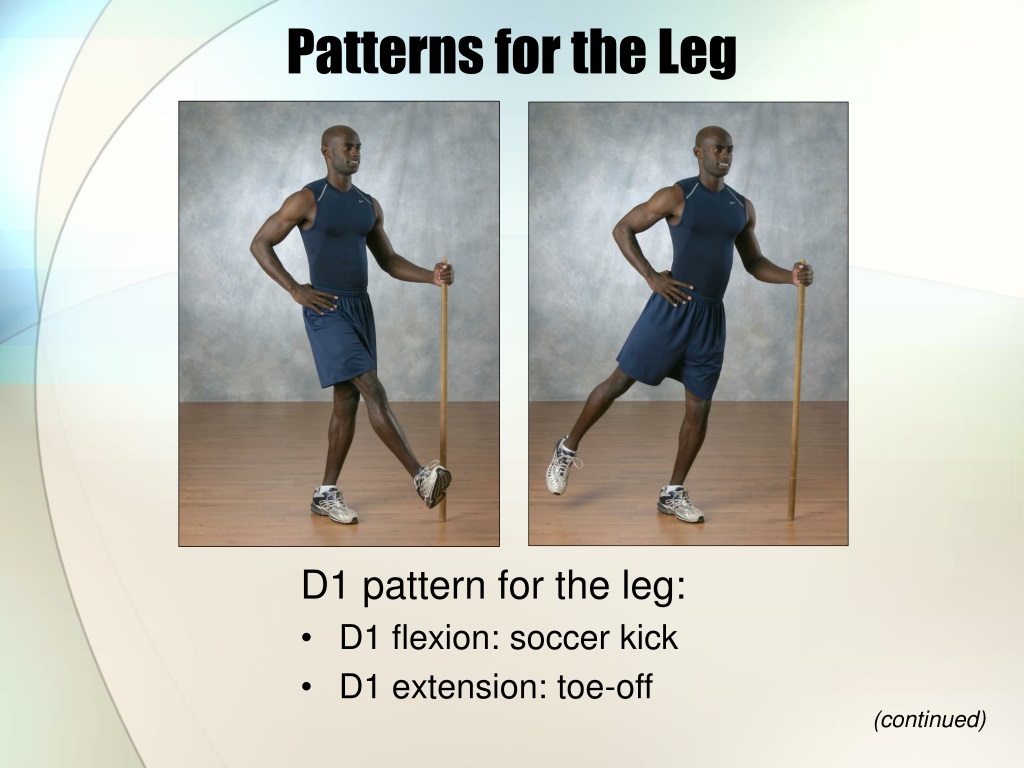
PPT Using the Spiral Diagonal Patterns of PNF PowerPoint
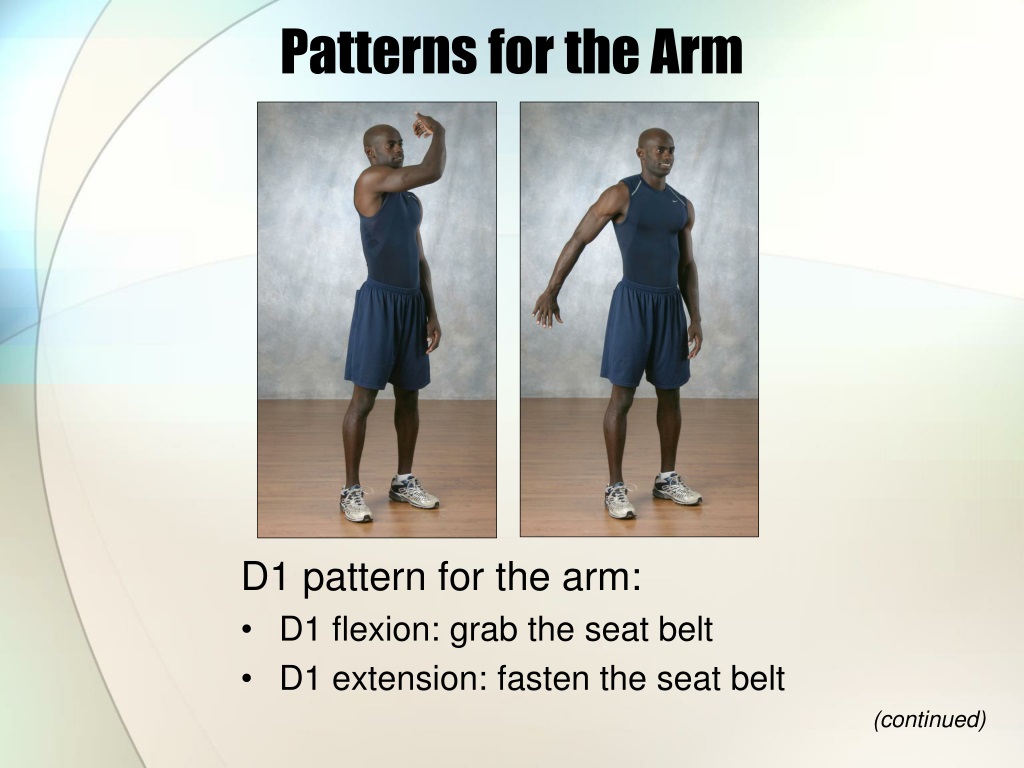
PPT Using the Spiral Diagonal Patterns of PNF PowerPoint

Shoulder PNF Pattern D1 Ask Doctor Jo YouTube
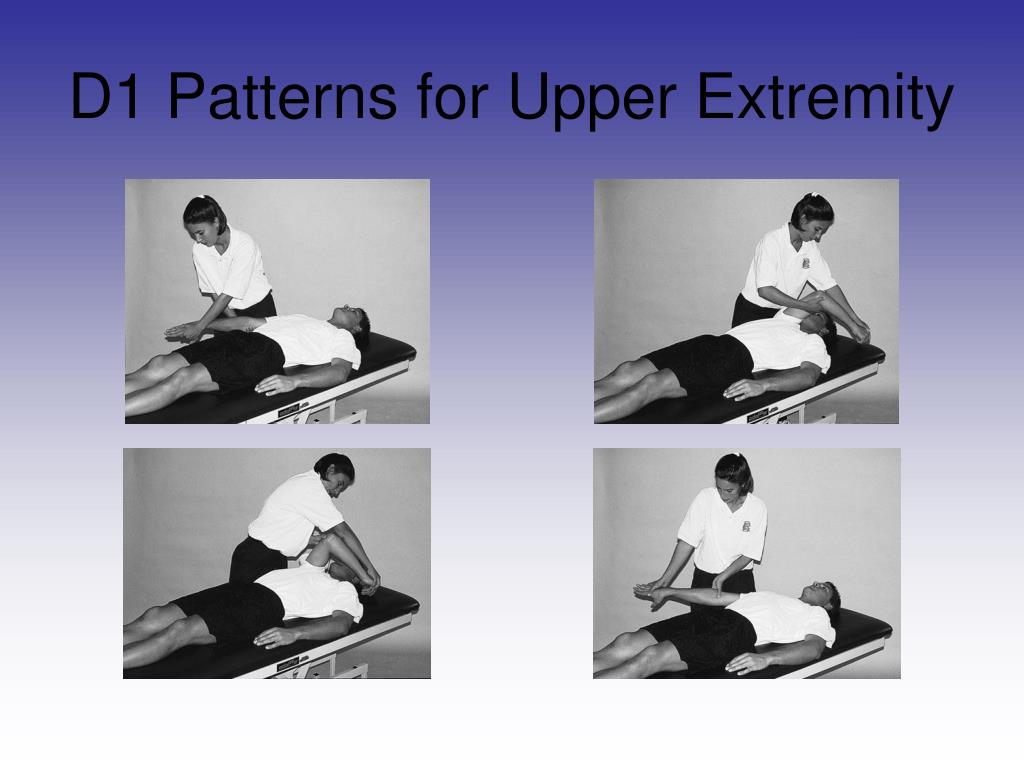
PPT Chapter 15 PNF and Other Soft Tissue Mobilization Techniques in
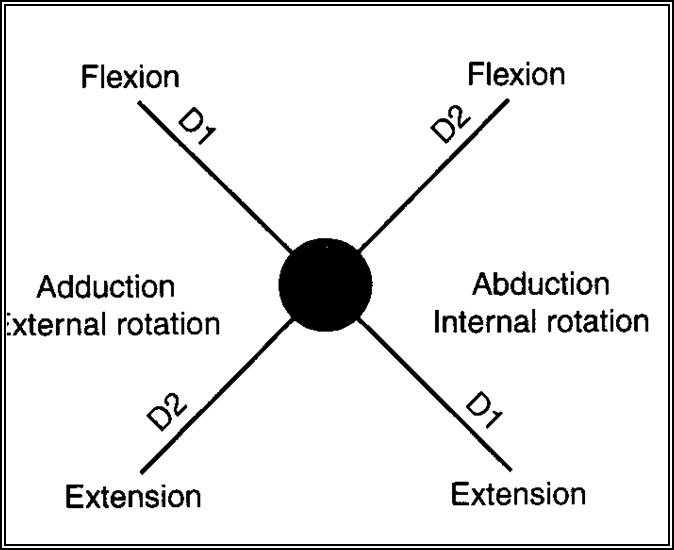
Proprioceptive Neuromuscular Facilitation Therapeutic Exercise in

LE D1&D2 Flexion/Extension PNF patterns YouTube

PNF patterns d1 & d2 Flexion Extension upper extremity YouTube

D1 Flexion & Extension PNF patterns upper extremity YouTube

D1 Extension with Elastic Resistance. Download Scientific Diagram
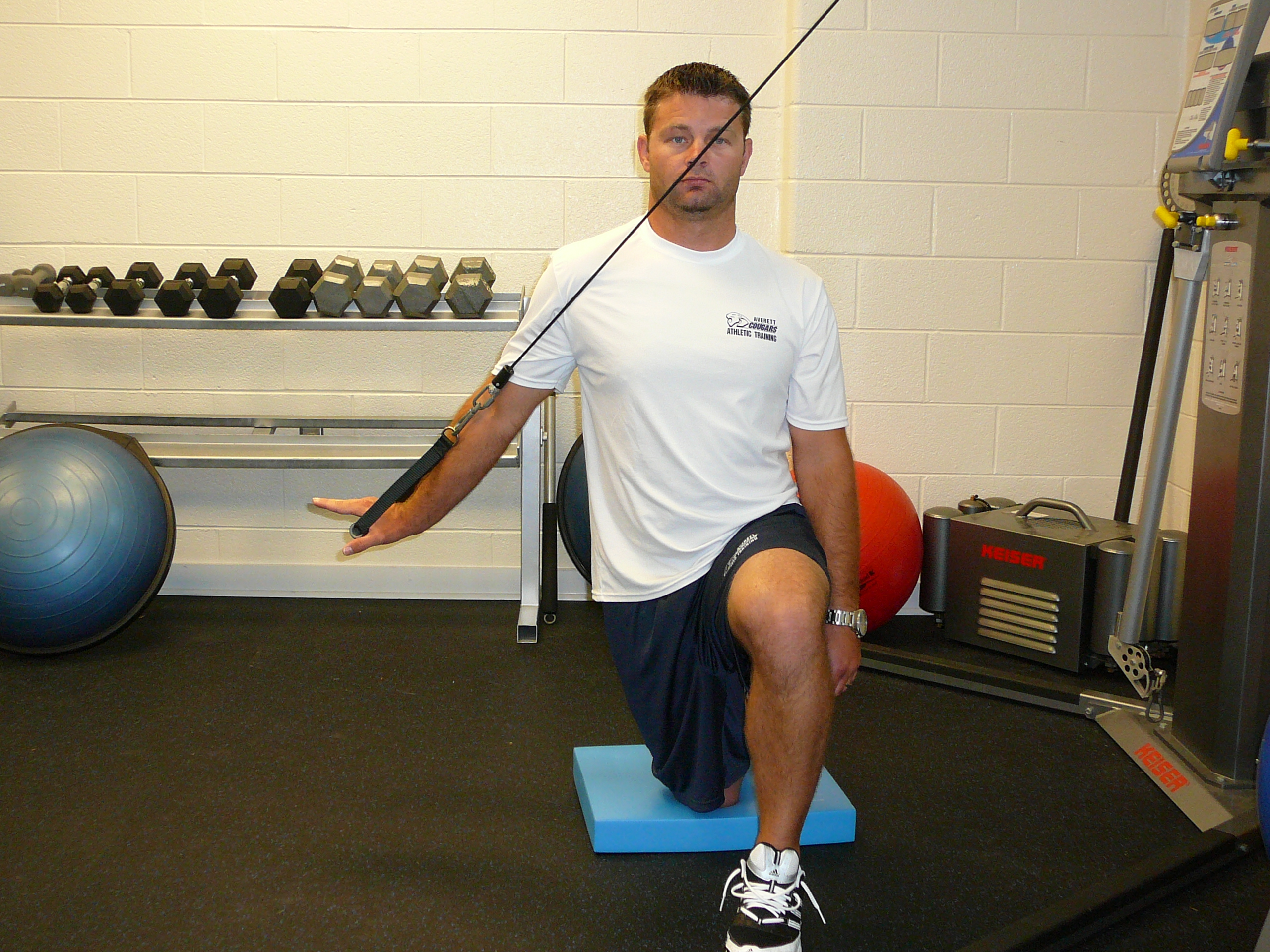
Proprioceptive Neuromuscular Facilitation The Foundation of Functional
Web This Video Describes And Shows The Proper Technique To Perform The Four Basic Upper Extremity Pnf Patterns (D1 Flexion, D1 Extension, D2 Flexion And D2 Extension).
Web Pnf Is Technique Used To Improve Neuro Muscular Coordination And Endurance.
D1 And D2 Motions Targeting Flexion And Extension.
Web What Are The Upper Extremity Pnf Patterns?
Related Post: